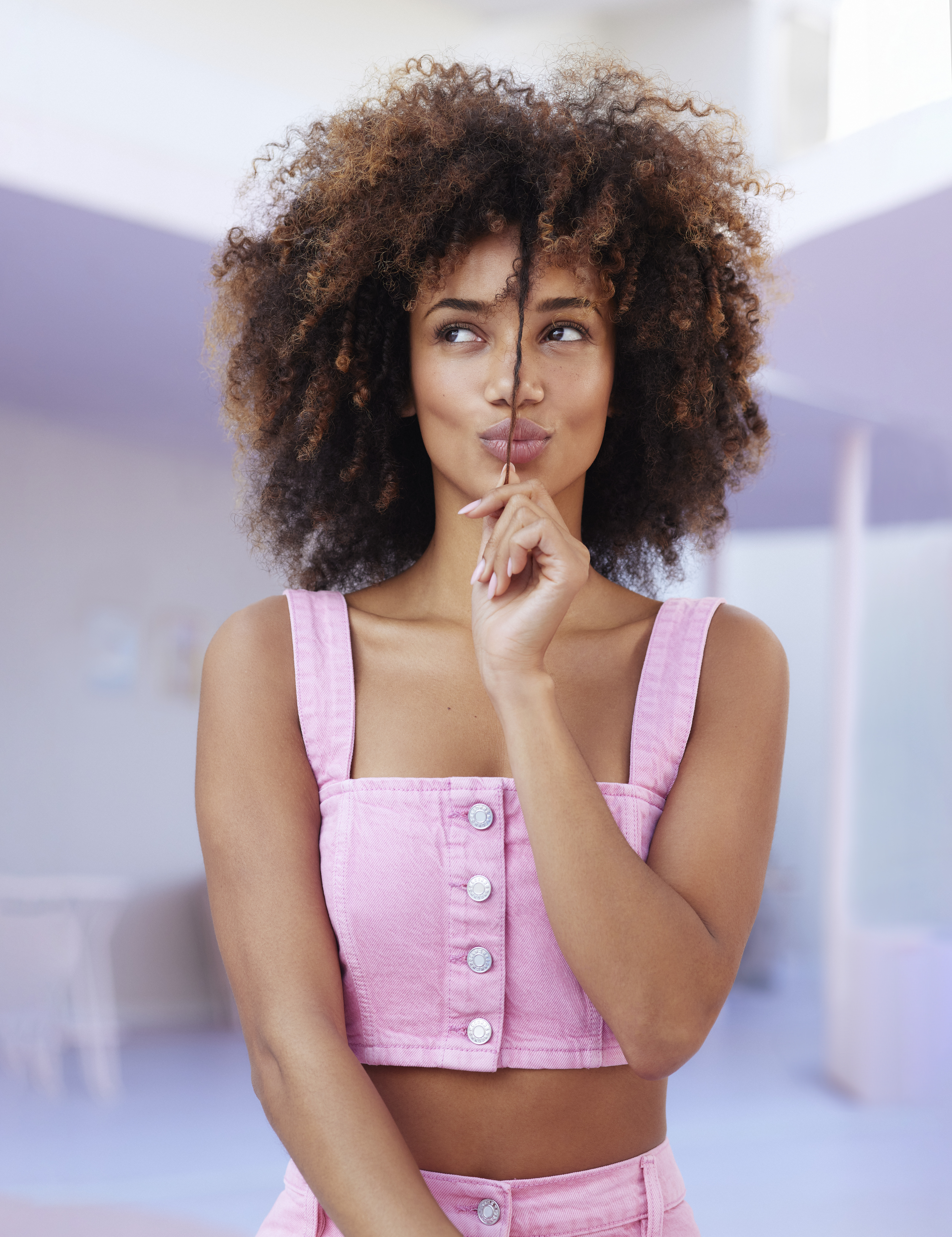
Why it’s good (and good for you) to change your look at the beginning of the year.

New year = new life? If we want to change, a new hair colour can help us to see ourselves under a different light and renew our energies, inside and out.

Changing hair colour is one of the most efficient ways to communicate. There are chameleon-like women who love changing their look every year, or even more frequently.

And then there are women who identify themselves with one colour and consider it part of their personality. In between, there are those who think that “changing your hair colour” is a mantra for psychological well-being and should be applied once in a while, because changing, in life, leads to new opportunities. Yes, even at the hairdresser’s.

But the real question is: how should hair colour be changed? WHEN is the right time? It is often said that a woman cuts her hair or changes hair colour when preparing for a breakup. But that’s not all: many decide to give their hair a twist at the beginning of a new year. Statistics confirm that a change of look is beneficial for mood, especially in January and September, months considered to be a good omen for the start of a new year, whether the calendar year, or academic / working year.
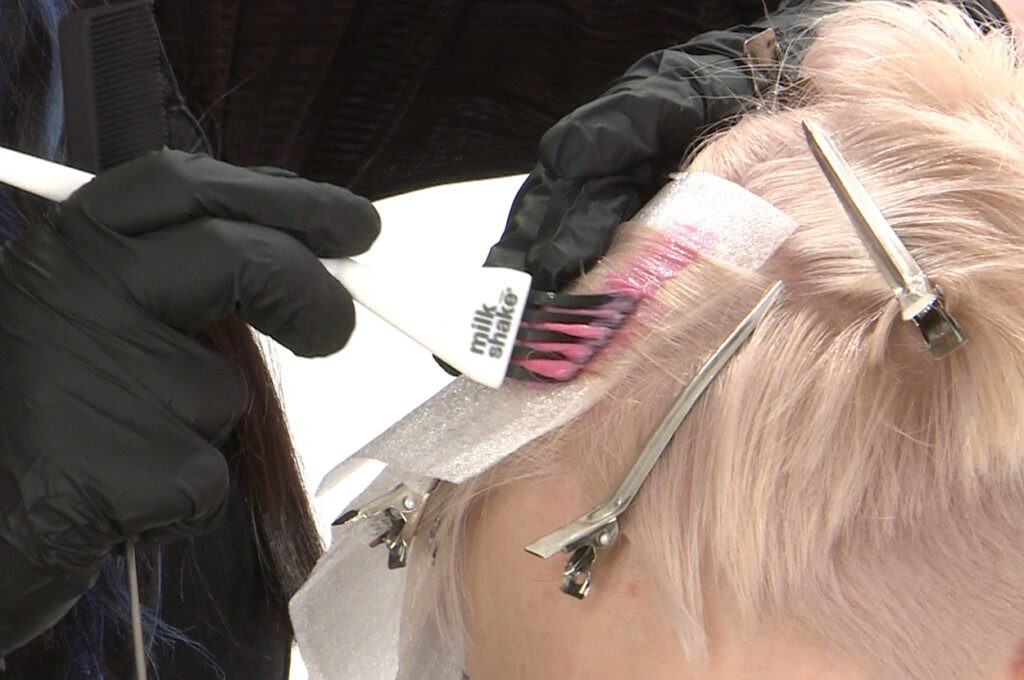
Reinventing oneself and one’s life, starting with such a symbolic gesture, is good and right. It is not just the diktats of fashions and seasonal trends that say this, but psychologists, too. Many forums and specialist research available online show that 65% of women opt for a hair colour change between the end of summer and the beginning of autumn, or before spring. Changing look is good for self-esteem, and if this happens in conjunction with a new beginning, the positive effect doubles. Renewing hair colour makes us more aware of our image, makes us feel in control of what we communicate, more dynamic and multifaceted. In short, more than a new haircut, a change of shade gives us the vitality and energy necessary to face daily challenges and the future.

If you’ve been thinking about changing your hair colour for a while, try doing it NOW, and take advantage of this new beginning to give yourself a boost. How can you choose the right hair colour to change for the better? Trust your instincts! And also take into account your features and complexion.

Changing your hair colour: tell me which colour and I’ll tell you who you are.

Brunettes, blonds, reds. We all love our natural colour madly, but let’s face it, it is often shades other than our own that appeal to us the most. So how can we face a total change of look? With this awareness.

Brown hair: earth tones = simplicity.

Dark, intense browns, chocolate, chestnut or hazelnut, shades of honey and bronze, are all typical shades of the earth. The woman who chooses to try a brown colour, coming from an ash blond or a copper red, is usually a person who loves simplicity, minimalism and the essentiality of authentic values.

Blond hair: the brightness of the sun = sunshine.

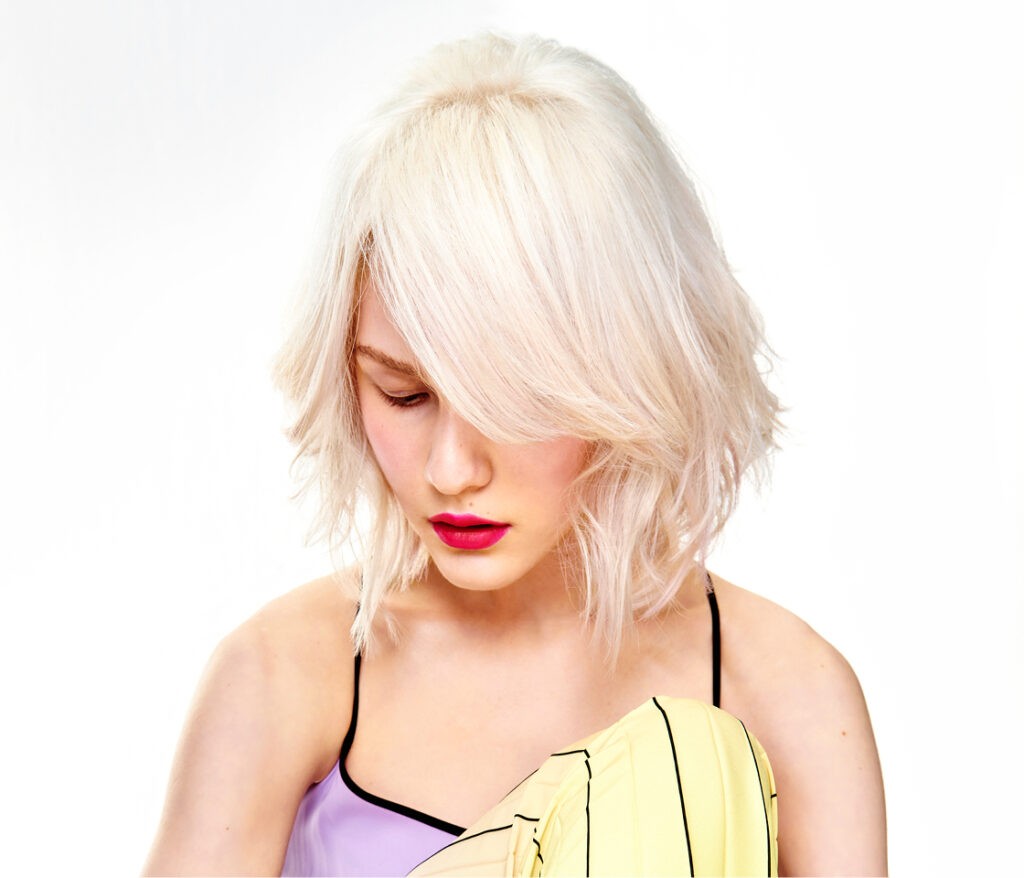
Blond hair is a very ancient symbol of female beauty, perhaps the most famous par excellence and is, in all its shades, the favorite colour of women who need to lighten up (inside and out) to regain a sense of seduction or lost sunshine. In short, blond hair always means guaranteed charm.

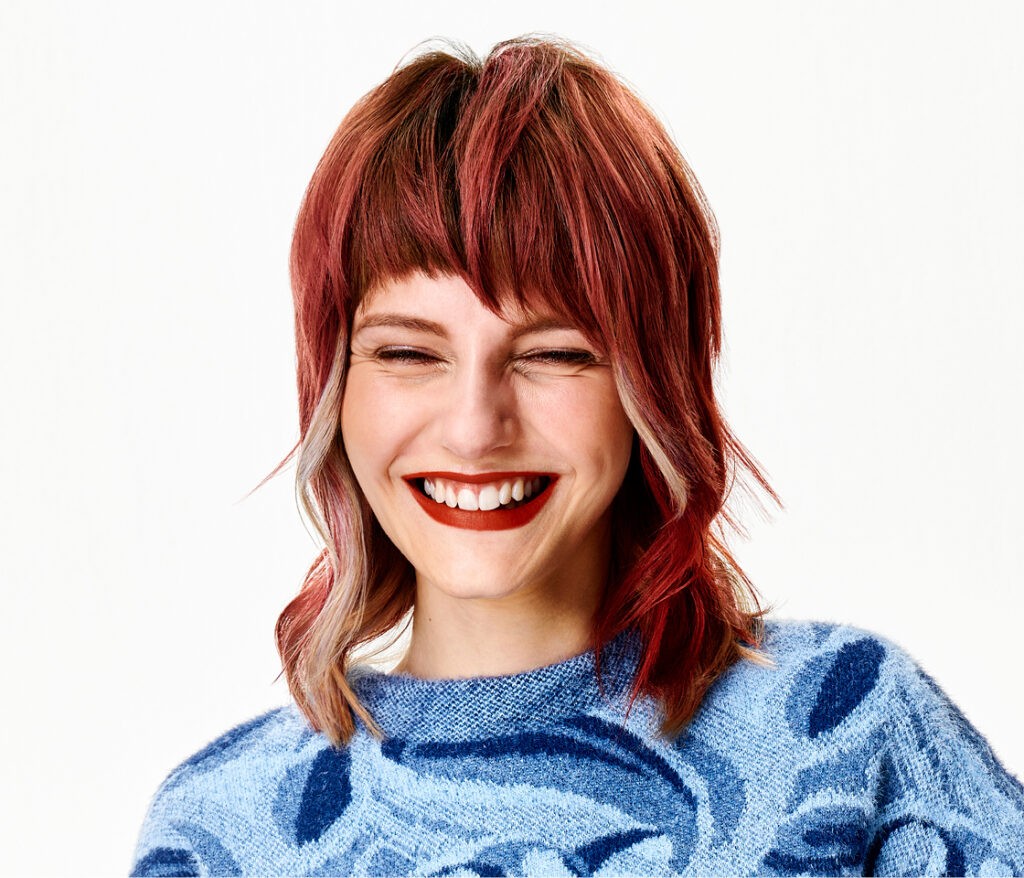
Red hair: the colour of fire = vitality.

Natural red hair is the rarest of all. Rebellious red, fiery red, coppery red or mahogany are decidedly stimulating colours that do not go unnoticed. Creative, spirited and dreamy woman will more easily opt for a bright hair colour change like red.

Pink and purple hair: fluorescent colours, originality.
Energy, personal fulfilment. Those who go crazy for pastel shades and so-called crazy colours are usually curious, a dreamer, with a rebellious spirit.

All bright colours can motivate us to take a new path, making us feel different, better people. Aiming for a hue with a thousand shades can therefore be very therapeutic, it can make us see more light in our life, starting from looking in the mirror. Try it first on the ends, to see the effect, and if you like it … Yes, go for the total look change!

Whichever shade you prefer, changing your hair colour generates a state of joy and euphoria. If we let ourselves be guided by our instincts and rely on our trusted hairstylist, then this change will surely lead to a positive outcome in different areas of our life. Good luck!
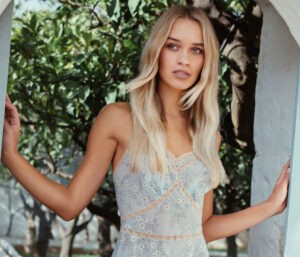
Blond state of mind: how, when and why

Everything you should know if you are or would like to become blond, to make the most of your hair (which shades to choose, the products to use, UV exposure…).

Summer is here, and our desire to lighten our hair blossoms with it. But that’s not all: having blond hair has always been a secret desire for all women. 

Ovidio was obsessed with it, medieval religions believed it to be divine, Renaissance painters painted it with realism, Elizabeth I envied it, Hitchcock was fascinated by it, the world of Hollywood made it stellar … What is the secret power of blond hair?

The etymology of the English word “blond” can be traced back to the Latin translation of “blandus” which means seductive, attractive. Blond hair has always been considered a rare, supernatural, divine aesthetic element. Aphrodite was depicted with very long light hair; Botticelli’s Venus has long golden hair, and the list goes on and on. In our cultural heritage, this physical characteristic is indisputably associated with beauty.

There are those who are lucky enough to be born with genes that give them natural blond hair, and those who resort to the hairdresser. Fortunately, the 2020 blond hair trends leave room for the interpretation of the most varied shades of blond. With a single diktat: the result of the colouring (or lightening) techniques must look 100% natural. Flat, even colour is a big no, whereas interesting blonds with shaded colour tones are a definite yes.

Blond state of mind: how, when and why

Honey blond hair

Let’s start from the base: light honey-coloured hair is a very natural shade envied by many brunettes. Don’t worry, warm blond highlights can warm up and illuminate brown hair. The important thing is to intervene first by lightening a few small strands, and to then apply a honey blond shade. The hair must then be maintained with a shampoo and conditioner for light hair, in order to keep the colour looking fresh. One of many celebs who love this look, Katy Perry wore 2020 colour trendy hair: goodbye pixie cut, hello long extensions with a natural blond effect (seen in the Never worn white video). The secret to this look, even if you start with a brown base, is to opt for lighter highlights, leaving your base colour as it is. This blond shade lends itself to long, medium and short cuts.

Vanilla blond hair

Natural, as sweet as a pastry pie. Vanilla blond hair is the most classic and beloved gourmand shade ever. It is delicate and brightens and softens facial features. Loved by supermodels like Elsa Hosk and Romee Strijd, this colour looks good on both straight and wavy hair. The textured finish helps to bring out the vanilla tones. Perfect for those with light skin and eyes, to be combined with a full and voluminous ‘70’s fringe.

Caramel blond hair

Let’s take Jennifer Lopez: 50 years old, a crazy body and enviable hair. The singer entered 2020 with a new colour refreshed by caramel highlights on long hair. The advantage of this warm blond shade is that you can wear it on both on very long hair, but also on short hair. The natural effect is guaranteed because the colour of the roots remains natural, and only the lengths are touched. In addition, experts confirm that of all the blond shades available, this warm shade is the easiest to keep for a long time.

And if you want an even lighter effect, you can ask your trusted hairdresser to insert locks a few shades lighter than caramel. Just a few, but on the whole they will illuminate the face with a glamorous look. Goodbye flat hair! Hello J.Lo.

Platinum blond hair

A timeless classic since the days of Marilyn Monroe. You can call it platinum, ice blond, or baby blond. The 2020 version is a bit rebellious, highlighted by contrasting roots. Among the most followed celebs who have opted for this bold blond shade are Margot Robbie, Kristen Stewart and Lucy Boynton.

It is one of the strongest hair trends of the moment, which will continue into next fall. This very light blond shade is inspired by very blond hair typical of the Northern European phototype. It is an extremely bright blond shade that looks good on long hair, but also on bobs and lobs – as long as its with bangs. Consider that, in most cases, it first needs a total lightening. Warning: to say it looks good on everyone would be lying: try it if you have a diaphanous complexion and blue or green eyes. You will look like a fairy tale.

Blond state of mind: how, when and why

Blond hair with dark roots

Good news for blond hair without commitment. 2020 trends show off dark roots with blond ends. An example?  Cara Delevingne on the Dior red carpet a few months ago. This option gives shine to the hair without changing your hair colour at the roots. The darker the roots, the better.

Blended blond hair

If you are a natural blond, or if you want to lighten your brown hair gradually, you can take inspiration from the so-called “sun-kissed” shade. The golden tones are scattered over the lengths to guarantee a natural effect, just as if the hair had been bleached by the sun. It is ideal for medium cuts because it gives volume.  Supermodel Gisele Bündchen knows what we’re talking about…


NATURAL COSMETICS: HOW CAN I RECOGNISE THEM?

Everything that exists is made of elements, atoms and chemical molecules. Everything in nature that has not been manipulated by man is made of chemical substances. So what distinguishes a natural product from a non-natural product? What are the rules that define what can be defined as being “of natural origin”? Who decides?

In the cosmetic sector, natural products are not defined by legislation.

In other words, there is currently no law that distinguishes natural products from other categories of cosmetics. How is it possible therefore to protect oneself from all those brands and products that claim they are natural, organic, etc, but in actual fact are not? The market is like a thick forest where the self-proclaimed green parameters of brands are alternated with rules dictated by private certification companies who brands contact just to have a stamp.

It seems impossible to find a solution. But in the thick of the forest, there is a clearing, and today there is finally some kind of reference: positive corporate efforts led to the publication of ISO 16128 in 2017, the first (and for the time being, the only) worldwide guideline created by the International Organization for Standardization with the objective of harmonizing the cosmetic market with the concept of natural and to safeguard final consumers.

Natural ingredients and naturally-derived ingredients: a harmonised definition.

ISO 16128 defines the perimeter of “natural” with a criterion based on two pillars: that of quantification, with the calculation of a numerical index for each ingredient, and that of applicability to all cosmetic ingredients, thus clearing the field from the lists of alleged “good” and “bad” ingredients.

It assigns a value between 0 (not natural) and 1 (natural) to each ingredient, with some middle ground for those of derivation. Natural ingredients are those obtained from plants, animals, microorganisms or minerals by physical processes, fermentation, or other processes that do not involve an intentional chemical modification of the raw material. The “naturally-derived” ingredients are those which retain more than 50% of the initial natural molecular structure after the transformation processes.

What does “naturally-derived ingredients” mean?

The content of natural and naturally-derived ingredients declared for some of our products such as those of the milk_shake® my skin line is expressed by a percentage value followed by the words “naturally-derived ingredients”, calculated using the ISO 16128 method, and including water.

In the claim for the natural content of these formulas, we wanted be aligned with ISO 16128 because it affirms the values of measurability and objectivity in the same area in which, unfortunately, ambiguity and emotion still reign. This choice allows us to offer clear and transparent information, based on internationally recognized definitions, to give our customers the opportunity to compare our products with others on the market (or at least with those who have followed this path) and to therefore make the choices they feel are right for their lifestyle.

How are ingredients for z.one conceptTM formulas chosen?

When we decide which ingredients should be combined to create our products, we prioritise plant-based raw materials, of organic and natural origin, which are been carefully selected and controlled.

The triumph of colours, fragrances and properties of nature are within our products in the form of plant extracts and oils, as well as fruit juices, essential oils and food powders, which contain all the energy and vitality of the plant and give the scalp and hair precise substances with different functions: for example, they can protect from oxidative damage from aggressive treatments and factors, they can support hydration, or restructure the keratin of the hair to give empty hair fibres more body and improve the appearance and manageability of hair. Plant elements are integrated harmoniously with minerals, substances such as milk proteins and honey, and ingredients obtained from biotechnologies such as hyaluronic acid and hyper-fermented daisy extract, to obtain formulas capable of satisfying particular needs whilst respecting the scalp and hair, being pleasant and easy to apply.

Unfortunately, it’s almost impossible to obtain the desired cosmetic benefits with the use of only natural ingredients and of natural origin, and this is where the choice of synthetic substances comes into play, carefully selected from the most innovative and safe ingredients available. The main ingredients of synthetic origin used are preservatives to protect the products from microbial contamination, as well as polymers and emulsifiers to stabilize the formulas, fragrances to ensure a pleasant fragrance, and specific ingredients such as emollients, polymers and colourants to achieve ideal sensorial features and professional performance.

Our search for natural materials and innovative functional substances is always active.

We are constantly working to balance and optimize formulations, while striving to eliminate, reduce and replace the most discussed and controversial substances, to meet the evolving needs in the professional and beauty salon industry.

Whether they are natural or synthetic, we take care in choosing ingredients that meet our safety standards to achieve high performance, professional quality and optimal conditions for storage and stability.

IN SUMMARY:

• we support the values of measurability and objectivity to protect those who choose us and our products;
• we have aligned ourselves with ISO 16128 to declare the % of natural ingredients of our selected formulas;
• Optimal results are guaranteed by balancing ingredients of natural origin with innovative and safe synthetic ingredients.

Crazy about bangs! When to cut a fringe, and how to wear it, once and for all.

Long fringe, short fringe, to the side, or full cut? Each one suits a face shape and character.

Bangs are a status quo, a stroke of the scissors et voilà: it gives an immediate fresher, younger, and self-confident feeling. Short bangs, long bangs, layered bangs, side bangs, straight bangs or wavy bangs – variety is certainly not lacking in this iconic and timeless haircut. The first true pioneer of the fringe in history seems to have been Cleopatra, queen of Ancient Egypt, portrayed in terracotta busts with a rigorous haircut.

ARTICOLO 1120x960px8

But after her, countless women recognized for their strong personalities sported bold bangs and fringes: Louise Brooks, Audrey Hepburn, Betty Page, Brigitte Bardot, Jane Fonda, Peggy Moffit, Jane Birkin and even Anne Wintour wore bangs as a symbol of their femininity, as fringes have been in constant evolution, especially in the twentieth century. And the stars of today are no less: the Hadid sisters, Emma Watson, Kim Kardashian and Kendall Jenner, Selena Gomez, Taylor Swift and many other international celebs of all ages have chosen the layered quiff or bangs above the eyebrow to enhance their features, look and smile, but above all to give expression to their character. After all, the word “fringe” comes from Latin, framea, and means spear, sword. Fringe power!

But be careful: hairstylists remind us that the fringe should always be best adapted to the shape of the face to enhance its proportions. Among the faces most suitable for wearing fringes is a rectangular face, because it tends to need to “shorten” the length of the face; and the heart-shaped and diamond-shaped face, which can wear a baby fringe to camouflage a spacious forehead.

Fringes for a rectangular-shaped face
The rectangular or elongated face, which usually has a high forehead and a vertical elongation, is particularly suitable for wearing a long and full fringe, capable of balancing the proportions by optically shortening the face.

Fringes for a heart-shaped or diamond-shaped face
For a heart-shaped face, on the other hand, characterized by a wide forehead, pronounced cheekbones and small chin, it is better to have thick hair that gives movement and is able to optically enlarge the lower part of the face, diverting attention from the upper part. Yes, therefore, to side bangs, but straight bangs are ok too, as long as they are thick enough.
Even for the diamond face, go ahead with bangs, but only if thin and light, which creates a fresh look, or full and lateral for a more bold effect.

Fringes for an oval-shaped face
For the oval face, which tends to be well proportioned, with regular and delicate features, the mistake to avoid is to show off full, thick cuts and long bangs which instead tend to blur the harmony of the face. But if the forehead is wide enough, experimenting with all types of bangs is ok, including longer and fuller ones. Otherwise, it is better to opt for lighter and more slender cuts, which can also be worn sideways.

Fringes for a triangular-shaped and square faceARTICOLO 1120x960px7
To rebalance the proportions of the triangular face, with a low and narrow forehead, and in which the lower part prevails over the upper one, the ideal fringe is long, layered and dishevelled, straight or to the side. Avoid the short “pin-up” style bangs and even haircuts.
SOS square face: to rebalance the angular features with an evident jaw, yes to voluminous and lateral quiffs that smoothen the hardness of the features. No to heavy fringes and geometric cuts.

Fringes for a round face
The round face is par excellence the least suitable for showing off bangs, the short hair (even a bob cut) tends to emphasize the roundness of the face. But with a layered, dishevelled, side fringe, it’s a whole different story.
So, good news: the truth is that bangs are for all face shapes, each with the right proportions. And if you haven’t tried it yet, 2020, the threshold of a new decade, is certainly the year for experimentation.